How to Fill Slow Nights at a Bar: 7 Proven Strategies
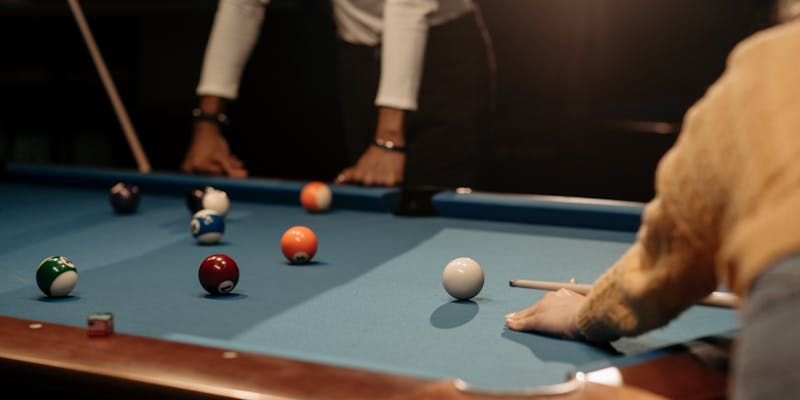
Every bar owner knows the feeling. Friday and Saturday nights are packed, the kitchen is slammed, and the registers are humming. Then Tuesday rolls around and you can hear the ice settling in the wells. If you are wondering how to fill slow nights at a bar, you are not alone. The gap between weekend revenue and weeknight revenue is one of the biggest challenges in the hospitality industry, and closing that gap is what separates bars that survive from bars that thrive.
The good news? Slow nights are a solvable problem. You do not need a massive marketing budget or a complete rebrand. You need reliable, repeatable programming that gives people a reason to walk through your door on a Tuesday or Wednesday. Here are seven strategies that actually work, ranked by impact.
1. Pool Leagues: The Single Best Slow-Night Strategy
If your bar has even one pool table, a weekly pool league is the highest-impact move you can make. A single league night brings in 12 to 20 people on a predictable schedule, week after week, for 16 to 20 weeks straight. These are not one-time visitors. They are regulars who build habits around your bar.
Let us do the math. A typical league night brings in at least 12 players. Each player averages a $30 tab over the course of an evening (two to three drinks, maybe a basket of wings or a burger). That is $360 in revenue on a night that might otherwise bring in $80 to $120. Over a 16-week season, that is an additional $5,760 in revenue from a single league night, and that does not account for friends, significant others, and spectators who tag along.
The best part? League players are sticky. They show up rain or shine because their team is counting on them. They become your most loyal customers, and many of them start coming in on non-league nights too. If you only implement one strategy from this list, make it this one.
2. Themed Nights That Build Identity
A themed night gives your bar an identity on a specific day. Trivia Tuesdays, karaoke Wednesdays, open mic Thursdays — the format matters less than the consistency. Customers need to know that every single week, your bar has something happening. Rotating themes confuse people. Pick one per night and commit to it for at least three months before evaluating.
The most successful themed nights create their own micro-community. Trivia regulars form teams and develop rivalries. Karaoke regulars become performers who draw their own audience. This social gravity is what turns a promotion into a tradition.
3. Pool Tournaments With Low Barriers to Entry
Weekly or monthly pool tournaments serve a different audience than leagues. Tournaments attract casual players, people who might not commit to a 16-week season but will gladly drop $10 to $20 on a single-night competition. A well-run bar tournament can pull in 16 to 32 players on a slow night, especially if you keep the entry fee low and the prize pool attractive.
Combine a tournament with drink specials for participants and you create an event that people actually talk about. Word of mouth is still the most powerful marketing tool a bar has, and competitions give people stories to tell.
4. Strategic Happy Hour Specials
Standard happy hours typically target the 4 to 6 PM after-work crowd, but your slowest period might be 7 to 9 PM on a Tuesday. Consider an extended or “reverse” happy hour that starts later in the evening. Pair drink specials with an activity, such as discounted pool table time or a free game of pool with every pitcher purchased, to give people a reason to stay longer.
The key is making your specials specific enough to drive action but not so deep that they erode your margins. A $1 off wells is forgettable. A “League Night Pitcher Deal” tied to a specific event feels like an insider perk.
5. Live Music and Pool Combos
Live acoustic music on a slow night creates ambiance without overwhelming conversation, and it pairs surprisingly well with pool. A solo guitarist or a small jazz combo can transform a dead Wednesday into a laid-back hangout that attracts a slightly different crowd than your weekend regulars. Keep the volume at a level where people can still call their shots and chat between racks. The goal is atmosphere, not a concert.
6. Social Media Promotion That Actually Works
Posting a generic “Come visit us tonight!” on Instagram does nothing. What works is content that shows your events in action: a photo of the league standings board, a short video of a tournament-winning shot, a story tagging the trivia champions. User-generated content from league players and tournament participants is gold because it reaches their networks organically.
Encourage players to check in, tag your bar, and share their stats. If you use a platform like Cued Up that tracks player stats and standings digitally, those shareable leaderboards and match results become free marketing every single week.
7. Loyalty Programs for Repeat Visits
A simple punch card or digital loyalty program that rewards weeknight visits specifically can nudge customers to shift some of their spending from weekends to slower nights. Offer double points on Tuesdays and Wednesdays, or a free appetizer after five weeknight visits. The goal is to reward the behavior you want to see more of, which is people choosing your bar on the nights you need them most.
The Data-Driven Approach
The bar owners who consistently fill slow nights are the ones who track what works. If you are running a league, you should know exactly how much revenue league nights generate versus comparable non-league nights. If you are running trivia, you should know your average Tuesday headcount before and after launching the program.
Modern venue management tools make this easier than ever. Platforms that track table utilization, player check-ins, and event attendance give you hard data to evaluate your programming. Stop guessing which promotions work and start measuring.
The bottom line: slow nights are not inevitable. They are a scheduling problem, and scheduling problems have solutions. Start with a pool league to build a reliable base of weeknight regulars, layer in additional programming, and track your results. Within a season or two, your Tuesday will start looking a lot more like your Saturday.